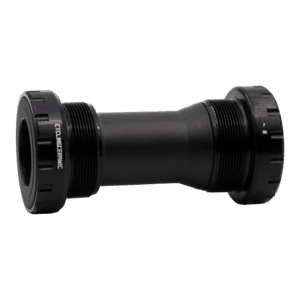
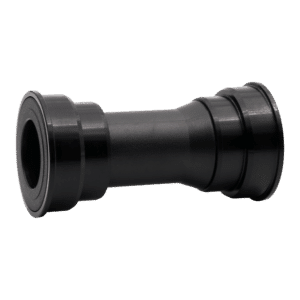
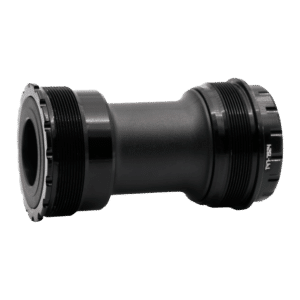
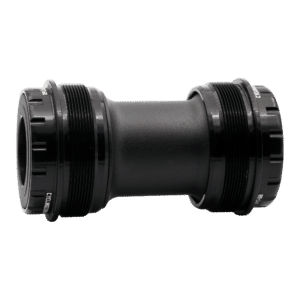
The bottom bracket is the only component on a road bike where every single watt of pedalling effort passes through one pair of bearings. That makes it tempting to assume any friction reduction there is automatically worth the upgrade, and equally tempting for sceptics to dismiss the gains as marginal. Both reactions miss the actual data.
Independent laboratory testing places a CyclingCeramic bottom bracket at 0.56W of friction versus 1.57W for a standard Shimano Dura-Ace BB86, a 64% reduction at the same load. That figure is not a marketing claim, it comes from the last full year of independent Friction Facts testing before that lab was acquired in 2016. The harder question is what those numbers mean for an actual rider, and whether the durability story behind a ceramic BB is more or less important than the watts.
What Is a Ceramic Bottom Bracket and How Does It Differ?
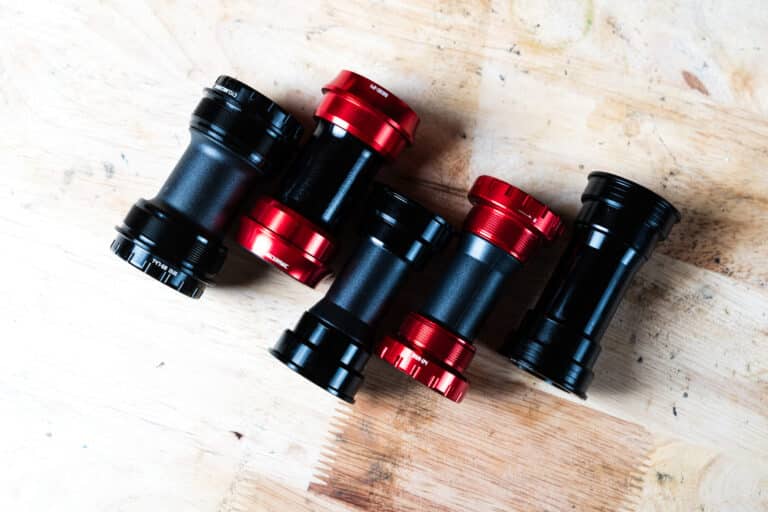
A bottom bracket is the bearing assembly that allows the crankset to rotate inside the bicycle frame. In a standard unit, both the bearing balls and the inner and outer races are made of bearing steel, typically a chrome-alloy steel hardened to a specific Rockwell value. The complete assembly sits inside two cups that are either threaded into the frame, pressed into the frame, or designed to a specific frame standard such as BB86, PF30 or T47.
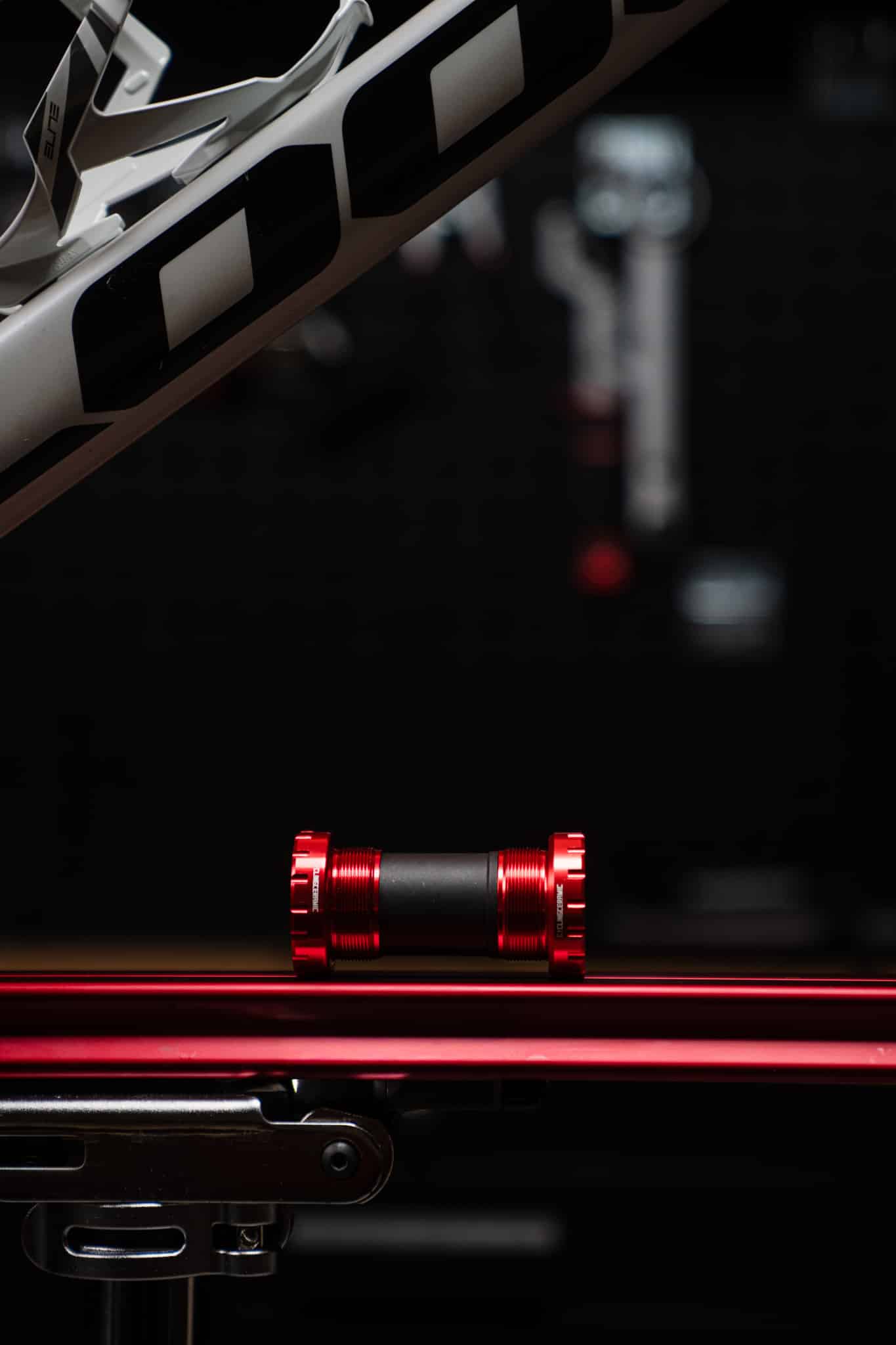
A hybrid ceramic bottom bracket replaces only the rolling elements, the balls, with silicon nitride Si3N4 ceramic. The races stay in steel but are hardened further, typically to Rc 62 or above, to handle the load profile of the harder ceramic balls. The cups, the seals and the lubricant are also re-engineered as a system rather than swapped one component at a time.
The expression “ceramic bottom bracket” almost always means hybrid ceramic in cycling. Full ceramic bearings, where the races are also ceramic, exist in industrial applications but are not relevant on a bicycle, where the load and the manufacturing cost do not justify them. Anything in this article refers to hybrid ceramic with Grade 3 Si3N4 balls and steel races, the configuration we manufacture in France.
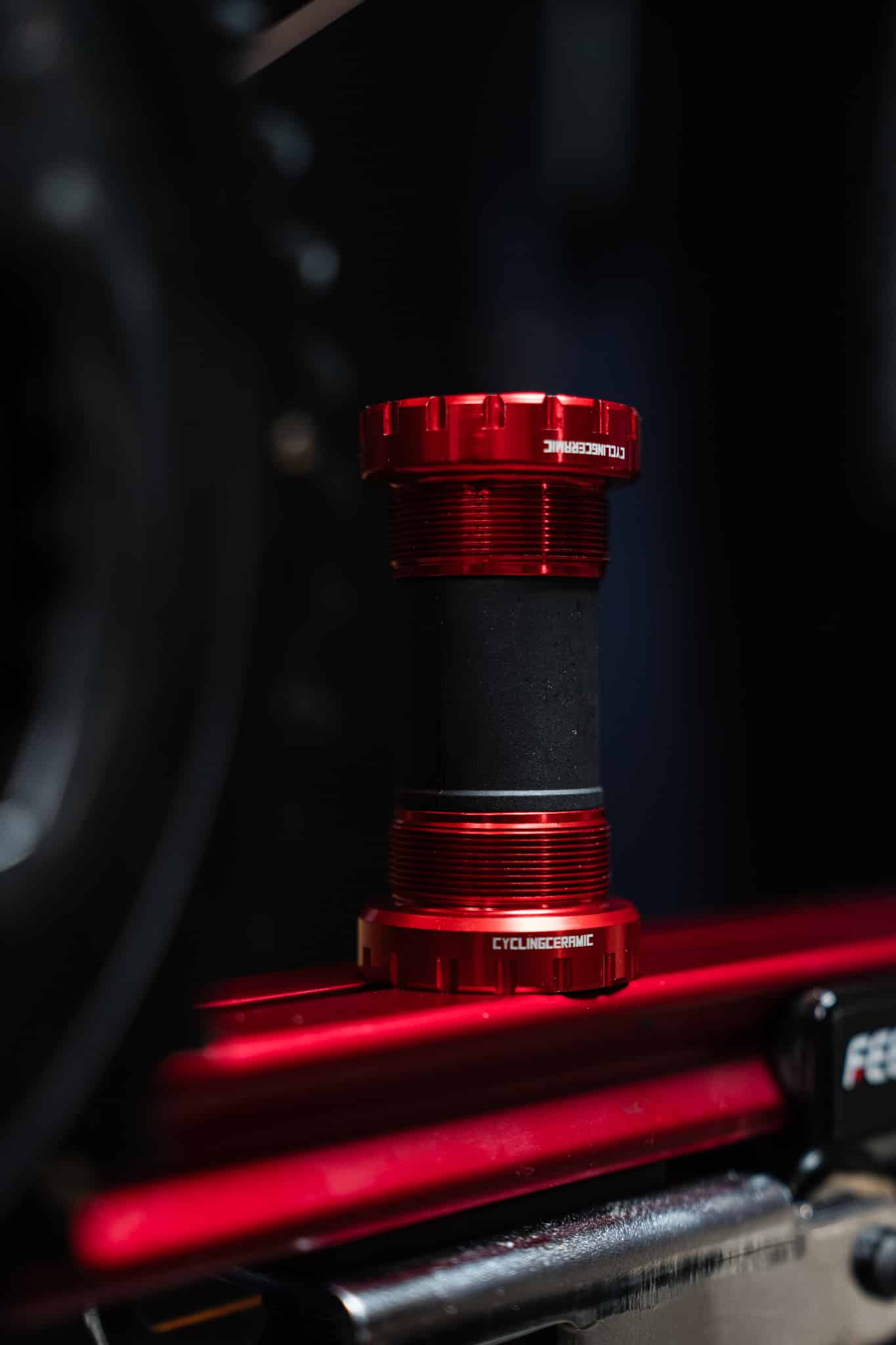
Material Properties Compared: Si3N4 vs Bearing Steel
The performance difference between a standard and a ceramic bottom bracket is rooted in three measurable material properties.
| Property | Bearing Steel | Si3N4 Ceramic (Grade 3) |
|---|---|---|
| Hardness | Rc 58 to 62 | Rc 78 equivalent |
| Density | 7.85 g/cm³ | 3.20 g/cm³ (about 60% lighter) |
| Surface finish | Variable, depends on grade | Mirror-polished, Grade 3 tolerance |
| Corrosion behaviour | Rusts on water ingress | Inert, no oxidation |
| Thermal expansion | Higher coefficient | Lower, more dimensionally stable |
| Cold welding under load | Possible with poor lubrication | Not possible (different materials) |
The hardness gap is the most often cited and the most often misunderstood. Harder balls are not faster on their own. They are faster because they deform less under load, hold their geometry across the bearing’s life, and slowly polish the steel race rather than indenting it, on the strict condition that the race itself is hard enough to take the load.
That last point is what separates a properly engineered hybrid ceramic bottom bracket from the budget products that gave ceramic a mixed reputation in the early 2010s. A Grade 3 Si3N4 ball running on a Rc 50 race will brinell that race within a season. The same ball running on a Rc 62+ race polishes it. Both setups exist on the market, and they do not deliver the same product.
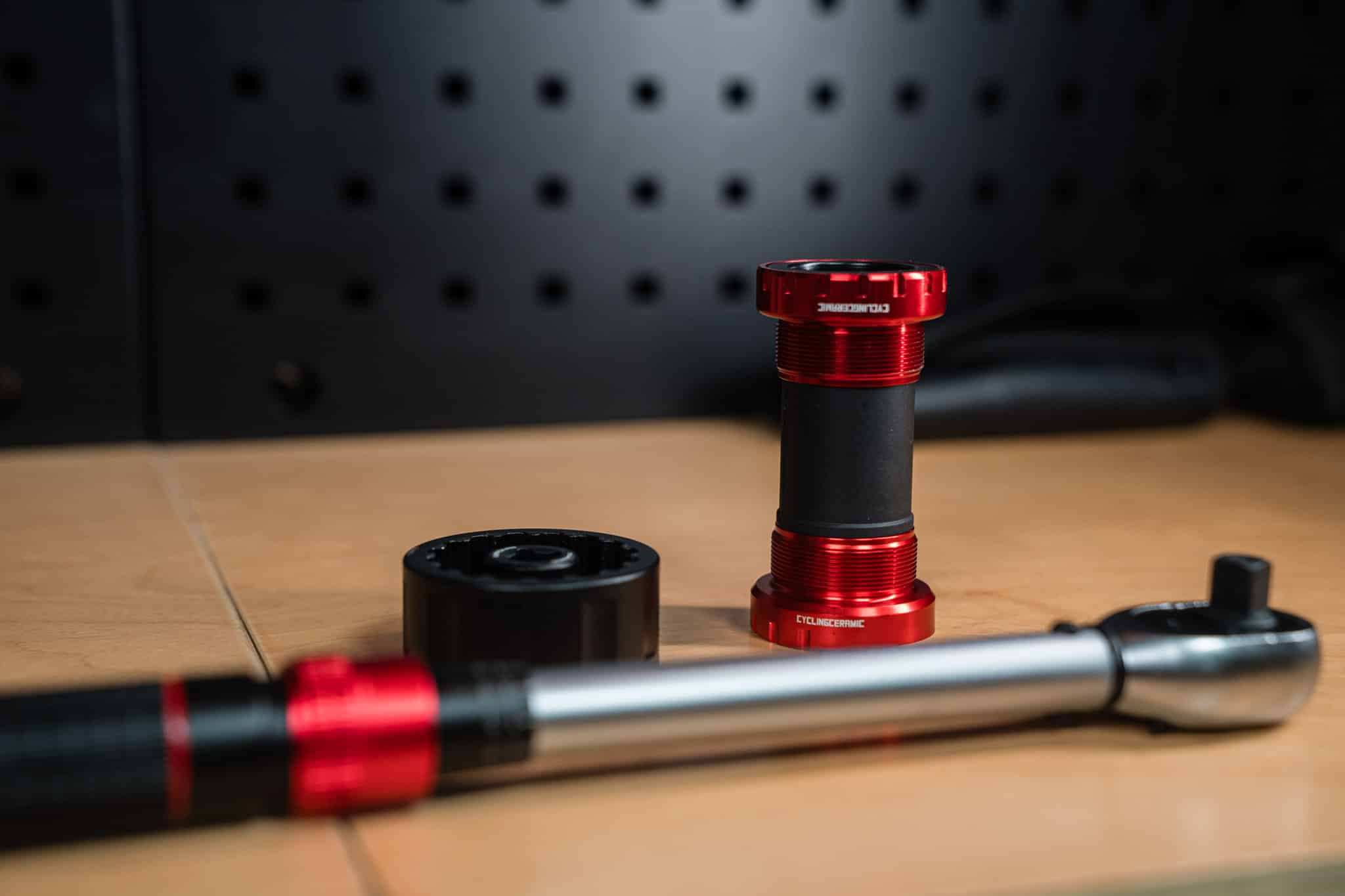
Lab Test Results: 0.56W vs 1.57W Measured
The reference data set on bottom bracket friction comes from Friction Facts, the independent Colorado laboratory that published bicycle drivetrain efficiency testing through 2016, the last full year before its acquisition. The protocol holds the bottom bracket at a constant load and rotation speed, measures the parasitic friction at the spindle, and isolates the bottom bracket from the rest of the drivetrain so the figure is attributable to that component alone.
Friction Facts BB measurement. Standard Shimano Dura-Ace BB86 measured at 1.57W. CyclingCeramic ceramic bottom bracket measured at 0.56W. Result: 1.01W reduction, equal to 64% less friction at the bottom bracket alone. Communicate as 64%, not as 60% or “around two thirds”.| Bottom Bracket Configuration | Measured Friction | Delta |
|---|---|---|
| Shimano Dura-Ace BB86 (standard) | 1.57W | Baseline |
| CyclingCeramic ceramic BB | 0.56W | -1.01W (64%) |
One watt at the bottom bracket alone is the kind of figure that sceptics dismiss in isolation. The honest reading is that one watt at the BB is one piece of a larger system. The full CyclingCeramic drivetrain stack, ceramic bottom bracket plus ceramic pulley wheels plus ceramic wheel bearings, measures around 6.8W of total parasitic friction versus roughly 16.5W for a standard equivalent system, an aggregate saving close to 10W on identical hardware otherwise.
Performance engineers regularly use the rule of thumb that 3W of drivetrain saving is roughly equivalent to 1 kg of bicycle weight in terms of perceived effort on a typical climb. By that measure, a 10W saving across the system is comparable to removing more than 3 kg from the bike, an order of magnitude that no realistic frame swap delivers.
Real-World Performance: Durability, Press-Fit Creaking, Pro Use
Watts on a dyno tell one story. What riders and mechanics actually live with on the bike tells another. Three real-world dimensions matter more than most lab discussions admit.
The durability gap is bigger than the watt gap. The most common failure mode of a standard steel bottom bracket in regular road use is rapid seizure, the bearing simply locks up, usually after water ingress and contamination accumulate at the seal interface. A hybrid ceramic unit with proper sealing and corrosion-immune balls does not fail this way under normal service. The crank stays smooth for several seasons rather than several months, which is why our entire bottom bracket range is backed by a 4-year warranty.
Press-fit creaking is a frame story, not just a bearing story. Most riders who hear creaking from their press-fit bottom bracket assume the bearing is the problem. In our workshop experience, the noise originates primarily from the cup material and the machining tolerance of the cups themselves, on the frame side. CyclingCeramic Assembly Grease, applied at installation, reduces the creaking but does not eliminate it on a frame whose press-fit interface is fundamentally noisy. A ceramic bottom bracket helps, because of the lower friction inside the rolling element, but no bearing technology can fully compensate for a marginal frame interface. The compatibility matrix linked below is the right starting point before any frame-specific install.
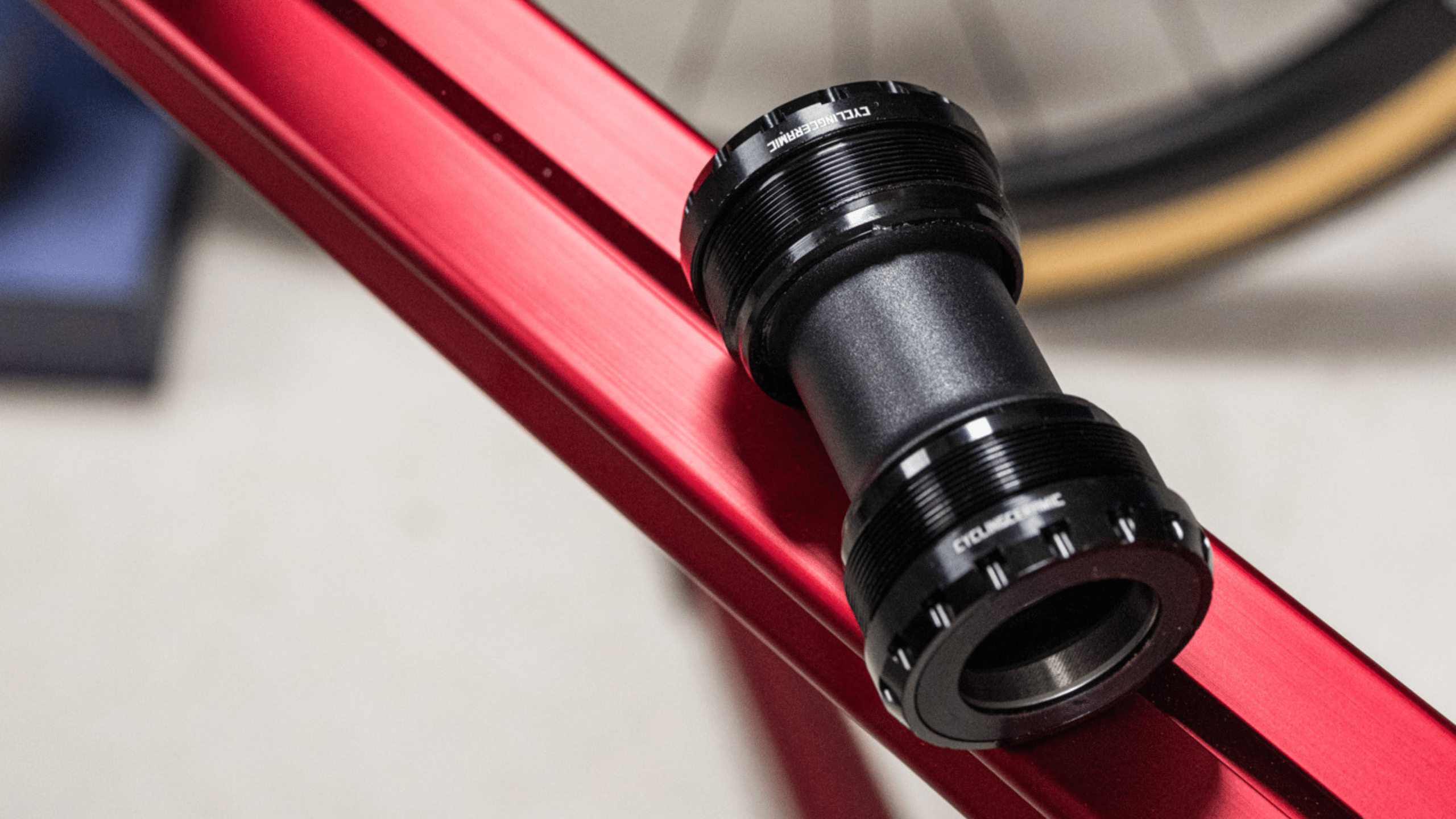
Pro use is the longest-running stress test we have. Our bottom brackets were raced by Arkéa-B&B Hotels in 2025, a UCI WorldTour team, on the full season including Tour de France stages, Giro stages and the spring classics. From 2026 They will be runned by Cofidis. Pro mechanics are uncompromising about parts that fail under their watch, and a four-year warranty for amateur use is the consumer-side mirror of that pro reliability standard.
Who Should Upgrade and Who Should Not?
A ceramic bottom bracket is not the right purchase for every rider. Four profiles cover most of the realistic decision cases.
Performance-focused road and triathlon riders. If you already pay attention to tyre choice, drivetrain cleanliness and chain maintenance because watts matter to your training plan, the bottom bracket is a logical upgrade. Stacked with ceramic pulley wheels and ceramic wheel bearings, the bottom bracket contributes to the full ~10W aggregate gain documented in lab testing. For a time trial or triathlon discipline where every watt-minute is measured, the case is straightforward.
High-mileage road riders sensitive to maintenance cost. A bottom bracket that lasts several seasons rather than being replaced annually is a meaningful saving on its own, especially on a press-fit standard where the install labour is not trivial. The friction gain is a bonus on top of the durability case.
Riders fighting recurring press-fit creaking. A ceramic bottom bracket installed with a proper assembly grease will not magically fix a frame interface that is fundamentally noisy, but it does change the failure mode. The metal-on-metal contact inside the bearing becomes effectively silent, which often makes diagnostic work easier when isolating the actual source of a creak.
Recreational riders on cheap drivetrains. If the bike runs a basic groupset, soft tyres, an unmaintained chain and rarely sees a clean, the BB upgrade is not where the money goes. Tyres, chain wax and a serviced cassette move the needle more on that profile. The ceramic BB makes sense once the rest of the drivetrain is already performing.
Choosing the Right Standard for Your Frame
A bottom bracket upgrade is a non-decision until the frame standard is identified correctly. Modern frames use one of about a dozen press-fit, threaded or hybrid standards, and the wrong choice means the BB will either not fit at all or sit incorrectly preloaded.
CyclingCeramic manufactures ceramic bottom brackets for the following standards: BB Bearings, BSA, BB86, BB4130, ITA, BBRIGHT, 386EVO, PF30 & PF30A, BB30, T47 & T47A, and T45. The complete list with frame fitment guidance is maintained on the bottom bracket compatibility matrix, which is the only reference we keep current for this question. If you are not sure what your frame uses, that page is the right starting point before browsing the bottom bracket range.
Frequently Asked Questions
Is a ceramic bottom bracket actually worth the money?
It depends on what you are paying for. On the friction side, independent Friction Facts testing measured a CyclingCeramic bottom bracket at 0.56W versus 1.57W for a standard Shimano Dura-Ace BB86, a 64% reduction. On the durability side, the most common failure mode of a standard steel bottom bracket is rapid seizure, which a properly engineered hybrid ceramic unit avoids. So the value is twofold, real friction reduction in the lab and a longer service life on the bike, both backed by a 4-year warranty.
How many watts does a ceramic bottom bracket really save?
Friction Facts measured 1.01W of friction reduction at the bottom bracket alone, from 1.57W down to 0.56W, a 64% drop. On its own that is a single component gain. Stacked with ceramic pulley wheels and ceramic wheel bearings, the full CyclingCeramic drivetrain measures around 6.8W versus 16.5W for a standard equivalent setup, roughly 10W saved. The bottom bracket is one piece of that aggregate gain, not the entire story.
Will a ceramic bottom bracket stop press-fit creaking?
Press-fit creaking originates mainly from the cup material and the machining tolerance of the cups themselves, not from the bearing balls. CyclingCeramic Assembly Grease reduces creaking on installation, but it does not eliminate it on a frame whose press-fit interface is fundamentally noisy. A ceramic bearing inside a clean, properly machined cup is the quietest configuration we see in the workshop, but no bearing technology can fully compensate for a marginal frame interface.
Which bottom bracket standards does CyclingCeramic cover?
CyclingCeramic produces ceramic bottom brackets for the following standards, BB Bearings, BSA, BB86, BB4130, ITA, BBRIGHT, 386EVO, PF30 and PF30A, BB30, T47 and T47A, and T45. The complete list and frame fitment guidance is available on the bottom bracket compatibility matrix. If you are unsure which standard your frame uses, the matrix is the only reference we maintain for that question.
How long does a ceramic bottom bracket last compared to a standard one?
A premium hybrid ceramic bottom bracket with Grade 3 Si3N4 balls and Rc 62+ hardened races typically outlasts a standard steel unit by a meaningful margin, because the ceramic balls do not corrode and do not cold-weld to the races under load. Standard steel BBs in regular road use frequently fail by rapid seizure once water ingress and contamination accumulate, a failure mode that hybrid ceramic units avoid in normal service. CyclingCeramic backs every bottom bracket with a 4-year warranty.
Bottom Line
A ceramic bottom bracket is worth it when two conditions are met. The rider already cares about drivetrain efficiency, and the rest of the drivetrain is already in shape to make a single-watt bottom bracket gain measurable inside a larger system. Friction Facts puts the lab figure at 1.01W saved at the BB alone, 64% less friction than a standard Shimano Dura-Ace BB86, and the same component contributes to the wider ~10W saving available across the full CyclingCeramic drivetrain stack.
The durability case stands on its own. A hybrid ceramic bottom bracket avoids the rapid seizure failure mode that finishes most standard steel BBs after a couple of wet seasons, and it is backed by our 4-year warranty across the range. If you know your frame standard, the next step is the compatibility matrix, then the bottom bracket range for the matching reference. If you are not sure, start with the matrix first.
Products mentioned in this article