Your gravel groupset determines how your bike shifts, brakes, and manages gear ratios across mixed terrain. In 2026, three ecosystems dominate the market: Shimano GRX, SRAM XPLR/AXS, and Campagnolo Ekar. Each takes a fundamentally different approach to gearing architecture, shifting technology, and pricing.
Every current gravel groupset delivers reliable performance on rough surfaces. The real differences come down to shifting feel, electronic vs. mechanical preference, 1x vs. 2x configuration, and budget. Below is a complete comparison of every major option, along with strategies to maximize drivetrain efficiency on gravel regardless of which system you ride.
What Makes a Gravel Groupset Different from Road?
Gravel groupsets share DNA with road components but diverge in several critical areas designed for mixed-terrain reliability.
Wider gear ratios. Road cassettes typically top out at 34T or 36T. Gravel cassettes reach 40T, 46T, or even 52T. This extra low-end range covers steep gravel climbs and loose technical terrain where road gearing leaves you spinning out or grinding to a halt. The trade-off is larger jumps between gears, though modern 12- and 13-speed drivetrains have narrowed these gaps considerably.
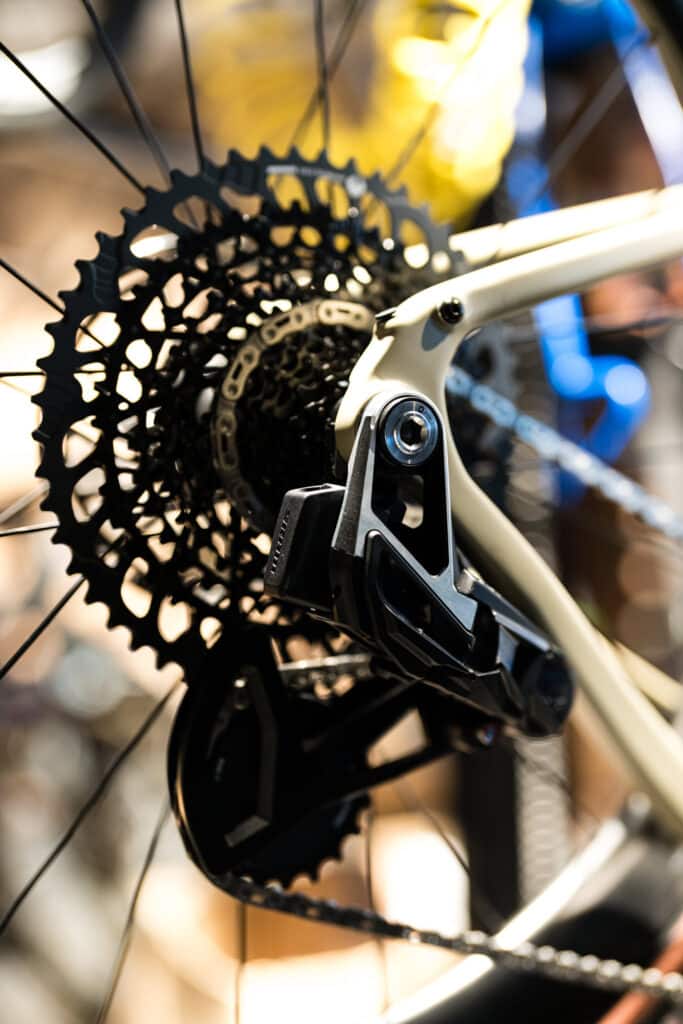
Clutch rear derailleurs. Every gravel groupset uses a clutch mechanism in the rear derailleur. This spring-loaded system increases chain tension to prevent chain slap and dropped chains on rough surfaces. The clutch adds a small amount of friction to the derailleur pivot, but the trade-off is worthwhile: a dropped chain mid-ride can cost minutes, while the friction penalty is measured in fractions of a watt. Road derailleurs omit this feature because smooth pavement does not generate the same chain-bouncing forces.
Ergonomic lever design. Gravel brake/shift levers feature wider hoods and textured surfaces for better control on rough terrain. Shimano GRX levers angle slightly inward for a more natural wrist position on flared handlebars. SRAM AXS levers use a single-paddle design that works reliably with thick winter or muddy gloves.
Disc brakes standard. Every gravel groupset ships with hydraulic disc brakes. Rim brakes are not an option in this segment. Disc brakes provide consistent stopping power in mud, rain, and dusty conditions where rim brakes lose effectiveness rapidly.
Tire clearance considerations. Gravel cranksets are often designed with a wider chainline and narrower Q-factor to accommodate the larger tire clearances (40-50mm) typical of gravel frames. Some manufacturers, like SRAM with their Wide crankset option, specifically address this with offset chainrings that prevent tire rub at full compression.
Every Major Gravel Groupset for 2026
Here is a side-by-side comparison of every major gravel groupset currently available, covering the key specifications that influence your riding experience.
| Groupset | Speeds | 1x / 2x | Shifting | Cassette Range | Standout Feature |
|---|---|---|---|---|---|
| Shimano GRX RX825 Di2 | 12s | 1x / 2x | Electronic | 10-51T (1x), 11-36T (2x) | Semi-synchro front/rear shifting |
| Shimano GRX RX820 | 12s | 1x / 2x | Mechanical | 10-51T (1x), 11-36T (2x) | Best mechanical shifting feel |
| SRAM Red XPLR AXS | 13s | 1x only | Electronic | 10-46T | T-Type architecture |
| SRAM Force XPLR AXS | 13s | 1x / 2x | Electronic | 10-46T (1x), 10-36T (2x) | Wide crankset for tire clearance |
| SRAM Rival XPLR AXS | 13s | 1x / 2x | Electronic | 10-46T (1x), 10-36T (2x) | Best value wireless electronic |
| SRAM Apex XPLR AXS | 12s | 1x only | Electronic | 10-44T | Entry-level electronic shifting |
| SRAM Apex 1 | 11s | 1x only | Mechanical | 10-42T | Lowest price, hydraulic brakes |
| Campagnolo Ekar | 13s | 1x only | Mechanical | 9-42T / 10-44T | Lightest gravel groupset (<2,385g) |
| Campagnolo Ekar GT | 13s | 1x only | Mechanical | 10-48T | Widest Campagnolo range |
| Campagnolo Super Record X | 13s | 1x only | Electronic | 9-42T / 10-48T | Premium Campagnolo electronic |

Shimano GRX
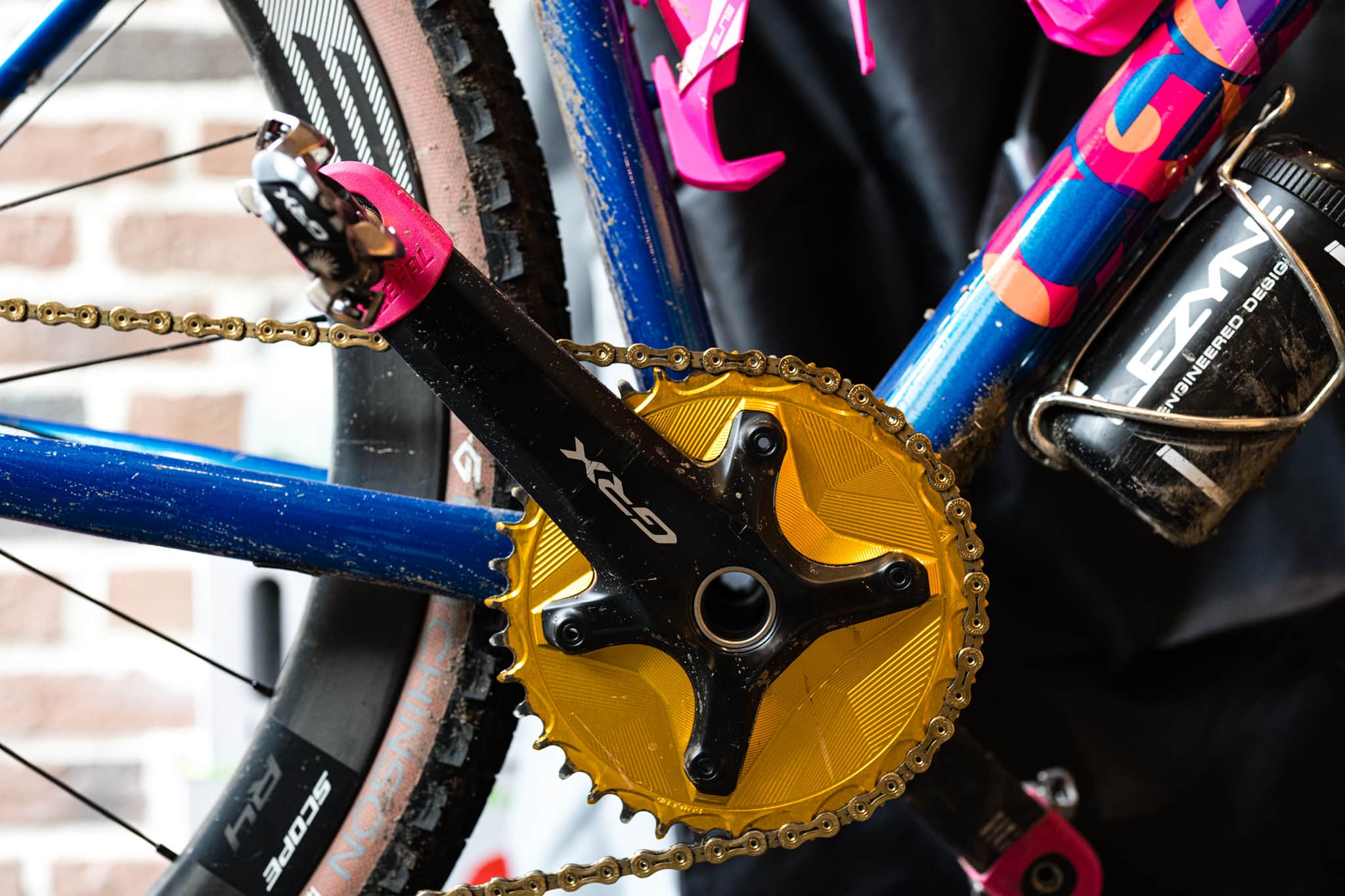
GRX is the only gravel ecosystem offering both mechanical and electronic options across the full 12-speed range. The GRX lever design, with its inward flare and ergonomic shape, is widely regarded as the most comfortable for long gravel rides. The 2x option (48/31T crankset with 11-36T cassette) delivers a 630% gear range with tight spacing, making it the strongest choice for riders who mix road and gravel equally. The 1x option with a 10-51T Micro Spline cassette provides massive range in a simplified package.
SRAM XPLR / AXS
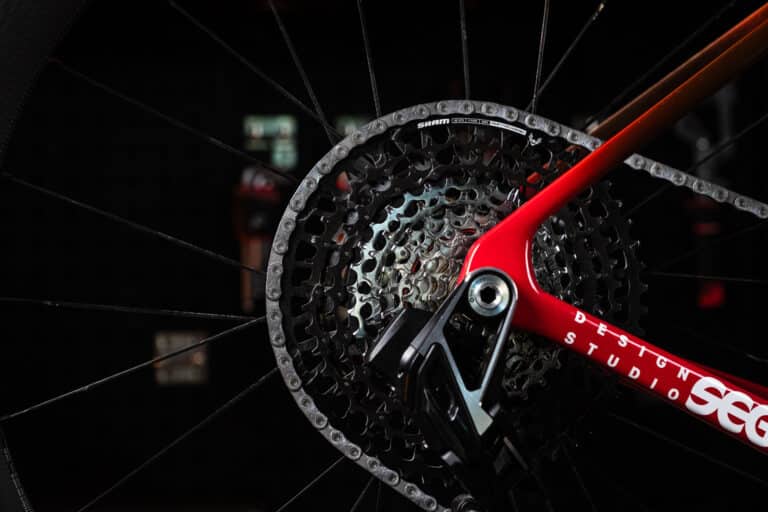
SRAM dominates wireless electronic shifting in the gravel segment. All SRAM gravel groupsets use wireless electronic actuation with no cables to route, contaminate, or maintain. The 13-speed Red XPLR AXS with its T-Type architecture offers the most gears in any 1x gravel setup, while the Apex XPLR brings electronic shifting to an accessible price point. SRAM’s AXS ecosystem allows cross-compatibility between road and gravel components, meaning you can pair Force road levers with a Rival XPLR rear derailleur if needed.
Campagnolo Ekar
Campagnolo pioneered the 13-speed gravel category. The original Ekar remains the lightest complete gravel groupset on the market, while the Ekar GT adds a wider 10-48T cassette for steeper terrain at a lower price. The Super Record X brings Campagnolo’s wireless electronic shifting to gravel for riders who want 13 speeds with zero cable maintenance. All Ekar systems are 1x only; Campagnolo does not offer a 2x gravel option.
For in-depth individual groupset reviews, cycling publications provide detailed ride impressions and long-term durability reports.

1x vs 2x: Which Configuration Suits Your Riding?
This is the most debated question in gravel cycling. The answer depends entirely on your terrain and riding style.
Choose 1x if:
- You ride primarily off-road on gravel, fire roads, and singletrack
- You value simplicity and minimal maintenance
- Dropped chains concern you (clutch + single ring virtually eliminates this risk)
- You accept slightly larger jumps between gears for a cleaner cockpit
Choose 2x if:
- Your rides mix significant road sections with gravel
- You want the closest possible gear spacing for varied gradients
- You need both very low climbing gears and high-speed road gears without compromise
- You race events that combine paved and unpaved sectors where efficiency at every cadence matters
Modern 1x drivetrains with 12 or 13 speeds have narrowed the range gap significantly. A 40T chainring paired with a 10-44T cassette covers a 440% gear range, sufficient for most gravel riding. A 2x setup like Shimano GRX’s 48/31T with an 11-36T cassette delivers a 630% range with tighter spacing throughout. The practical difference is felt most on long road sections where a 1x system may have you between gears at your preferred cadence.
The chainline efficiency difference is also worth considering. A single chainring positions the chain at steep cross-chain angles at the extremes of the cassette, increasing friction. A front derailleur allows the chain to maintain a straighter line relative to the rear cogs. This is one area where oversized derailleur cages provide a measurable benefit: larger 14/19T jockey wheels reduce chain articulation angles, partially compensating for the cross-chaining inherent in 1x setups and improving overall drivetrain efficiency in both configurations.
How to Optimize Any Gravel Groupset
Your groupset determines the shifting architecture, but several drivetrain components can be upgraded independently to reduce friction and improve efficiency. These upgrades work with Shimano GRX, SRAM XPLR, and Campagnolo Ekar equally.
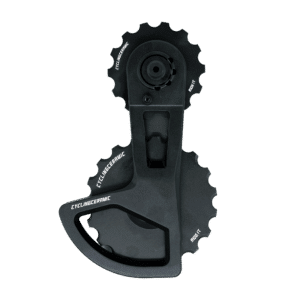
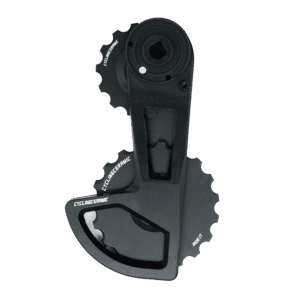
Oversized derailleur cages. Replacing stock jockey wheels with oversized 14/19T pulleys reduces chain wrap friction by approximately 3.3W compared to stock 11T units. CyclingCeramic offers a gravel-specific cage for Shimano GRX 11/12s, with models also available for SRAM and Campagnolo in the full oversized cage range. The larger pulleys also improve chain wrap on bigger cassettes, which is particularly beneficial for gravel’s wide-range gearing.
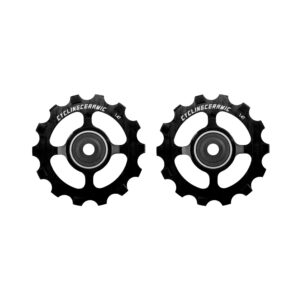
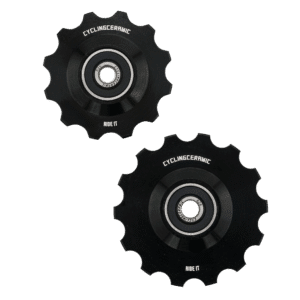
Ceramic pulley wheels. For riders who prefer to keep their stock derailleur cage, upgrading the jockey wheels alone delivers a significant friction reduction. CyclingCeramic 14T pulley wheels fit Shimano GRX and SRAM XPLR derailleurs, while 12/14T pulleys are designed for Campagnolo Ekar. Independent Friction Facts testing showed CyclingCeramic pulleys reduce friction by 97% versus stock Shimano units (0.039W vs 1.175W).
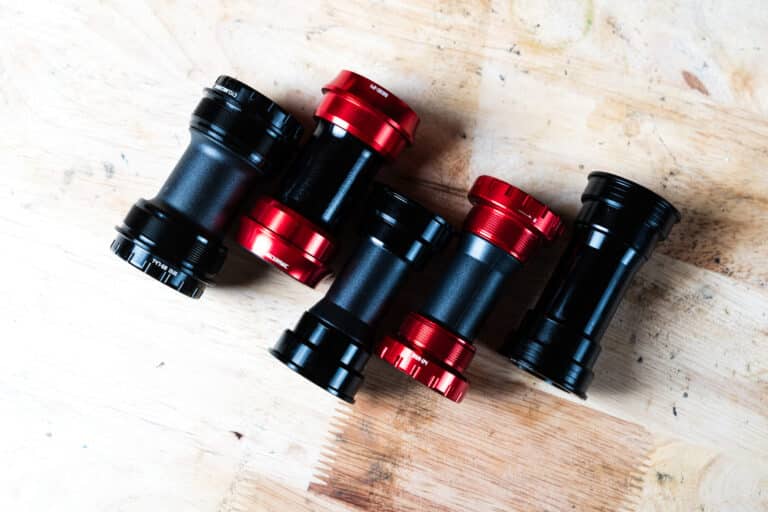
Bottom bracket upgrade. Gravel frames use various bottom bracket standards including BSA, T47, PF30, and BB86. CyclingCeramic offers ceramic bottom brackets for every standard, reducing bearing friction by 64% compared to stock units (0.56W vs 1.57W, Friction Facts 2016). A ceramic bottom bracket is one of the highest-impact single upgrades available because it affects every pedal stroke.
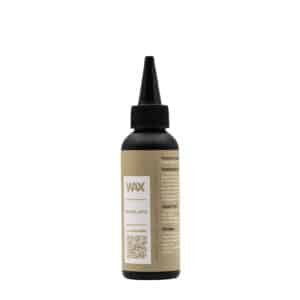
Chain lubrication for gravel conditions. Gravel riding exposes the chain to dust, mud, and water that degrade traditional oil lubricants rapidly. CyclingCeramic Offroad WAX is formulated specifically for these conditions, saving approximately 3W versus standard oil (CyclingCeramic internal testing) while keeping the drivetrain significantly cleaner between services.
Frequently Asked Questions
What is the best gravel groupset for beginners?
The SRAM Apex XPLR AXS offers the best combination of electronic shifting, hydraulic disc brakes, and accessible pricing for new gravel riders. Its 1x configuration simplifies gear management with no front derailleur. For riders on a tighter budget, the SRAM Apex 1 mechanical provides hydraulic brakes and reliable 11-speed shifting at the lowest complete groupset price.
Is electronic shifting worth it for gravel?
Electronic shifting offers consistent performance regardless of cable contamination, mud, or cable stretch. On rough terrain where cable-actuated systems can lose precision over time, electronic shifting maintains crisp gear changes ride after ride. The main trade-off is battery management on multi-day bikepacking trips. For single-day rides and events, most electronic systems provide 40+ hours of shifting on a single charge.
Can I use a road groupset on a gravel bike?
Technically yes, but it is not recommended. Road derailleurs lack a clutch mechanism, increasing the risk of chain drops on rough terrain. Road cassettes offer narrower ranges that may leave you undergeared on steep gravel climbs. Road brake levers are also not designed for the wider hoods and flared handlebars common on gravel bikes. A dedicated gravel groupset addresses all of these issues with purpose-built components.
How many speeds do I need for gravel riding?
For 1x setups, 12 or 13 speeds provide the best balance of range and close gear spacing. An 11-speed 1x system works but has noticeably larger jumps between gears on rolling terrain. For 2x setups, 12 speeds is the current standard, offering tight spacing across the full cassette range. The number of speeds matters less than the total gear range and the size of jumps between consecutive gears for your typical riding terrain.
What is the lightest gravel groupset available?
The Campagnolo Ekar is the lightest complete gravel groupset at under 2,385g for the full package including levers, calipers, crankset, cassette, chain, and rear derailleur. Its 13-speed mechanical design achieves this through aluminum construction and a single-ring-only philosophy. For electronic options, the SRAM Red XPLR AXS is the lightest wireless alternative, though it carries a significant price premium.
Conclusion
Every major gravel groupset in 2026 is capable and well-engineered. Shimano GRX offers the most versatile ecosystem with both mechanical and electronic options in 1x and 2x configurations. SRAM dominates wireless electronic shifting with options at every price point. Campagnolo Ekar delivers the lightest weight and 13-speed mechanical precision for riders who value simplicity.
The groupset you choose sets the foundation, but what you do with it determines how efficiently your drivetrain actually performs. Regardless of brand, upgrading to oversized derailleur cages, ceramic pulley wheels, and proper chain lubrication reduces friction at every contact point. For gravel-specific components compatible with GRX, XPLR, and Ekar systems, explore the full CyclingCeramic gravel range.
Products mentioned in this article

Written by
Ilan
SEO Consultant — La Refonte
SEO consultant and content strategist responsible for CyclingCeramic's organic growth strategy. Every article is grounded in Friction Facts test data and real-world cycling expertise.