Le gravel cycling est passé d'une expérimentation de niche à l'une des disciplines qui connaît la croissance la plus rapide dans ce sport. Et avec cette croissance est arrivée une avalanche de composants spécifiques au gravel : guidons évasés, fourches à suspension, groupes dédiés, roues plus larges, tiges de selle télescopiques. Les options sont écrasantes, et la plupart des conseils de mise à niveau se concentrent sur ce que vous pouvez ressentir: confort, tenue de route, adhérence des pneus.
Mais voici ce que la plupart des guides de mise à niveau manquent complètement : la catégorie de composant avec le impact mesurable le plus important sur les performances en est une que vous ne ressentez pas du tout. Friction de la transmission.
Les tests indépendants en laboratoire réalisés par Friction Facts montrent que les pertes par friction dans une transmission de série atteignent 16,5W au rythme de course. C'est la puissance que vos jambes produisent mais qui n'atteint jamais la roue arrière. Une transmission améliorée stratégiquement réduit ce chiffre à 6,8W, économisant environ 10 watts, l'équivalent de retirer plus de 3 kg de votre vélo.
Ce guide couvre chaque catégorie de composants de votre gravel bike, puis vous montre exactement où investir pour le plus grand retour sur investissement : des watts testés en laboratoire et vérifiés indépendamment qui vous rendent plus rapide sur toutes les surfaces.
Qu'est-ce qui rend les composants de vélo de gravier différents ?
Vélos de gravier occupent une position intermédiaire unique et exigeante entre les vélos de route et les VTT. Leurs composants doivent relever des défis qu'aucune discipline ne rencontre seule, et la compréhension de ces exigences est essentielle avant de prendre des décisions de mise à niveau.
Vibration et impact. Les surfaces de gravier transmettent beaucoup plus de vibrations que l'asphalte. Chaque composant, du guidon aux roulements de roue, doit absorber ou gérer cette énergie sans compromettre la durabilité. Les surfaces rugueuses créent également des charges de choc qui sollicitent les roulements, les jonctions de cadres et les composants de poste de pilotage beaucoup plus que la conduite sur route lisse.
Exposition environnementale. La poussière, la boue, l'eau stagnante et les graviers attaquent chaque pièce mobile de votre vélo. Les roulements, les chaînes et les transmissions subissent des taux d'usure accélérés par rapport à leurs équivalents de route uniquement. Les composants qui dépendent de joints étanches ou qui sont vulnérables à la corrosion, en particulier les roulements standard en acier chromé, souffrent de manière disproportionnée sur les graviers.
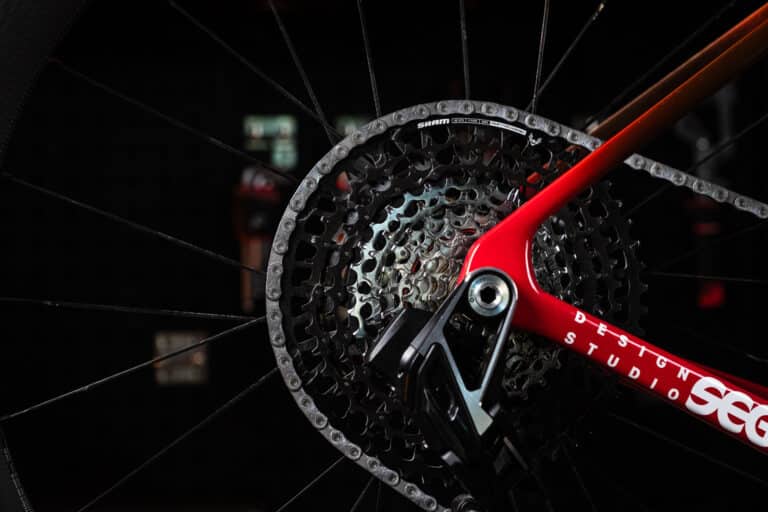
Large plage de rapports. Le Gravel exige des braquets plus bas pour les montées raides et meubles, ainsi qu'un braquet raisonnable en haut de gamme pour les sections goudronnées de liaison. Les plages de cassette de 10-44T ou plus larges créent des longueurs de chaîne plus importantes et des angles d'articulation de la chaîne plus grands au niveau des galets de dérailleur, deux facteurs qui amplifient la friction de la transmission par rapport aux rapports plus serrés utilisés sur les vélos de route.
Polyvalence des pneus. La possibilité de monter des roues de 700c ou de 650b avec des pneus de 35 mm à 50 mm ou plus est une caractéristique déterminante du gravel. Cette polyvalence affecte les charges des roulements de moyeu, la résistance au roulement et les caractéristiques de maniabilité, autant de facteurs qui se connectent directement à la sélection des composants.
Ces exigences signifient que les composants de gravel ne sont pas simplement des composants de route avec des dégagements plus larges. Ils doivent être plus durables, mieux scellés et optimisés pour l'efficacité dans une gamme de conditions plus large que n'importe quelle autre discipline cycliste ne l'exige.
Composants Essentiels pour le Gravier Expliqués
Groupes de transmission : le cœur de votre vélo de gravel
Le groupe (manettes, dérailleurs, pédalier, cassette, chaîne et freins) contrôle votre transmission et votre puissance de freinage. Trois fabricants dominent les groupes spécifiques au gravel :
Shimano GRX est le groupe de gravier le plus largement spécifié, disponible en versions mécaniques et électroniques Di2. Les configurations GRX 820 (2×12) et GRX 822 (1×12) offrent de larges gammes de vitesses avec une qualité de changement de vitesse raffinée. Les freins à disque hydrauliques éprouvés de Shimano offrent une puissance de freinage constante dans des conditions humides et boueuses.
SRAM XPLR apporte le changement de vitesse électronique sans fil au gravel grâce à l'écosystème AXS. La gamme s'étend de Rival XPLR (entrée de gamme électronique) à Red XPLR (économie de poids haut de gamme). La philosophie 1x de SRAM simplifie la transmission et réduit la complexité mécanique, un avantage réel lorsque la boue et les débris menacent la précision des changements de vitesse.
Campagnolo EKAR est le seul groupe conçu exclusivement pour le gravel dès le départ. Sa configuration 1x13 offre la plus large plage de vitesses à plateau unique disponible, avec une cassette dédiée 9-42T. Le pignon supplémentaire signifie des pas de vitesse plus courts malgré la large plage de rapports.
Roues et Pneus
Les roues représentent l'une des améliorations les plus importantes sur n'importe quel vélo de gravier. Le choix entre les roues de 700c et de 650b affecte tous les aspects de la qualité de conduite :
roues 700c roulent plus vite sur les surfaces plus lisses et maintiennent leur vitesse plus efficacement. Ils sont préférés par les coureurs de gravier de compétition et les cyclistes qui passent beaucoup de temps sur des routes de gravier bien tassées. La plupart des cyclistes associent les roues de 700c à des pneus de 38 à 45 mm pour le meilleur équilibre entre vitesse et confort.
roues 650b accepte des pneus plus larges (jusqu'à 2,1″ / 54 mm+), offrant plus d'amorti, une meilleure adhérence sur les surfaces meubles et un centre de gravité plus bas pour une stabilité accrue. Ils excellent sur les terrains accidentés et techniques, mais sacrifient une partie de l'efficacité de roulage sur l'asphalte et le gravier lisse.
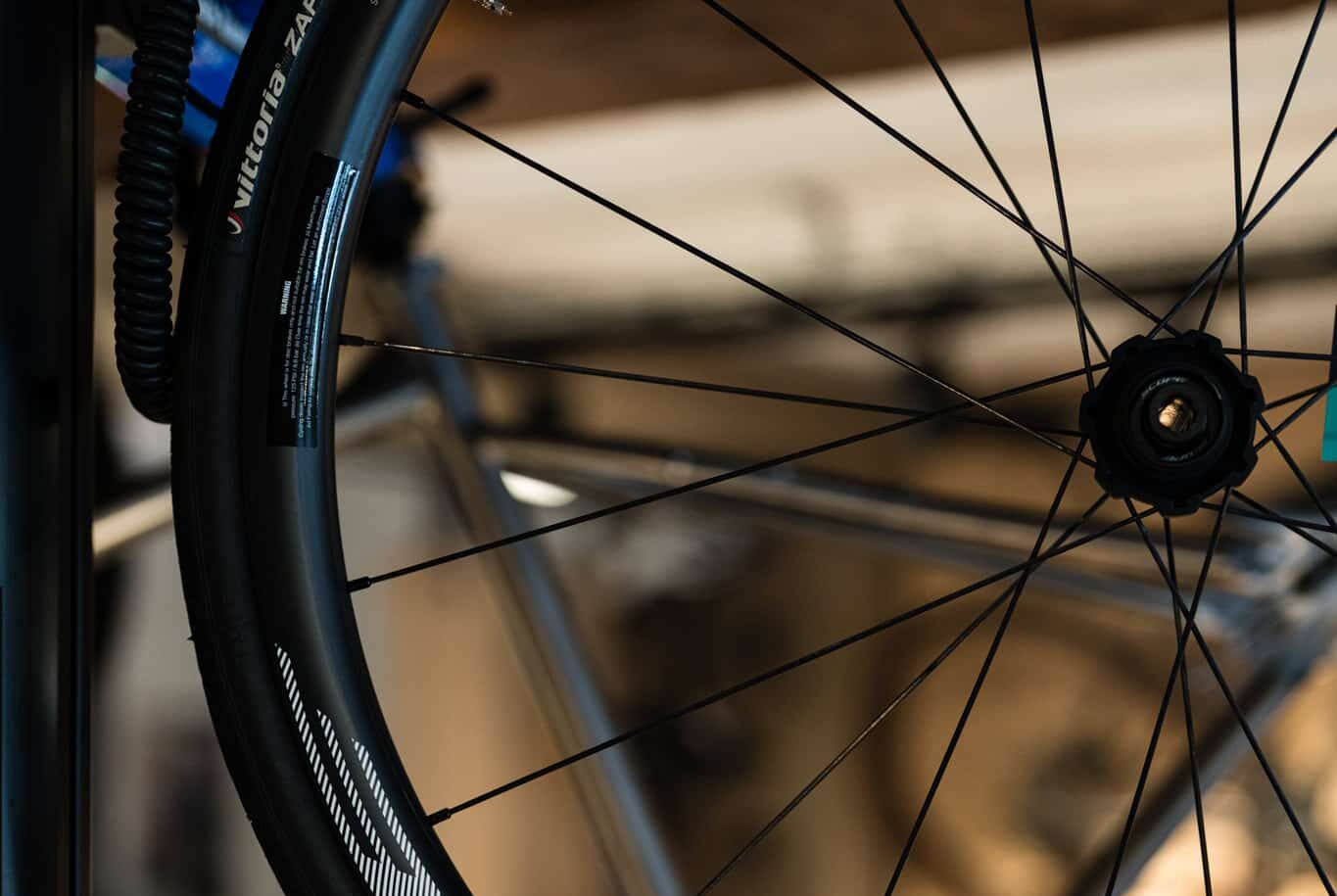
Quelle que soit la taille des roues, les roulements à l'intérieur de vos moyeux déterminent la fluidité avec laquelle ces roues tournent, et combien de temps elles continueront à tourner librement avant que la dégradation environnementale ne s'installe. C'est là que la plupart des cyclistes négligent une opportunité de mise à niveau importante.
Guidons et Cockpit
Les guidons spécifiques au gravel sont dotés de drops évasés, généralement de 12 à 24 degrés d'évasement extérieur, des cocottes aux drops. Cette position des mains plus large améliore la stabilité et le contrôle dans les descentes et sur terrain accidenté. Les guidons en fibre de carbone filtrent en outre les vibrations à haute fréquence, réduisant la fatigue des mains sur les sorties de trois à quatre heures.
Une potence plus courte (70-90 mm contre les 100-120 mm habituels sur route) accélère la réponse de la direction et améliore le contrôle sur les terrains techniques, tandis qu'une tige de selle télescopique, de plus en plus courante sur les montages gravel, permet un ajustement rapide de la hauteur de selle pour les descentes abruptes.
Efficacité de la transmission : c'est là que les vrais watts sont gagnés ou perdus
La plupart des guides de mise à niveau pour le gravier se concentrent sur les pneus, le guidon et les selles, des composants que vous pouvez sentir directement. Mais la catégorie de mise à niveau ayant le plus grand impact mesurable sur les performances est celle que vous ne pouvez pas du tout sentir : la friction de la transmission.
Chaque coup de pédale transmet la puissance à travers une chaîne de roulements, de pignons et de pièces mobiles. Chaque point de contact introduit des pertes par friction. À vitesse de course, ces pertes s'accumulent pour donner une pénalité de puissance significative à laquelle la plupart des cyclistes ne pensent jamais, car elle n'est pas perceptible de la même manière que la pression des pneus ou l'inconfort de la selle.
Tests de laboratoire indépendants par Friction Facts, le centre de test de roulements le plus respecté dans le cyclisme avant son acquisition par CeramicSpeed, a quantifié précisément ces pertes :
| Composant | Configuration standard | CyclingCeramic | Réduction |
|---|---|---|---|
| Roulements de Poulie (Shimano DA 11/11T) | 1,175W | 0,039W | 97% |
| Boîtier de pédalier (Shimano DA BB86) | 1,57W | 0,56W | 64% |
| Roulements de roue (DT Swiss 350 OE) | 5,5W | 2,6W | 53% |
| SYSTÈME GLOBAL | 16,5W | 6,8W | ~10W économisés |
Pour les cyclistes de gravel, ces chiffres sont sans doute Plus plus important que pour les cyclistes sur route. Voici pourquoi :
Les transmissions de gravier travaillent plus dur. Des cassettes plus larges impliquent des chemins de chaîne plus longs avec des angles d'articulation plus importants à chaque poulie et plateau. Combinés aux configurations 1x qui utilisent des angles de croisement extrêmes, les transmissions de gravel génèrent plus de friction par coup de pédale que les configurations de route équivalentes. La contamination par la poussière et le gravier amplifie encore ces pertes tout au long d'une sortie.
Des vitesses plus faibles amplifient les gains relatifs. Les vitesses de course sur gravier vont généralement de 25 à 35 km/h contre 38 à 45 km/h sur route. À ces vitesses plus basses, la traînée aérodynamique est proportionnellement moins dominante, ce qui signifie que l'efficacité de la transmission représente pourcentage plus élevé de votre résistance totale. L'économie de 10W réalisée grâce à l'optimisation de la friction est proportionnellement plus significative aux vitesses de gravier qu'aux vitesses de route.
Roulements de Roues : La Mise à Niveau Gravier la Plus Négligée
Vos roues de gravier tournent sur des roulements. Ces roulements déterminent non seulement la fluidité de leur rotation, mais aussi la durée pendant laquelle ils maintiendront cette performance avant que la dégradation ne s'installe. Sur le gravier, cette dégradation se produit de manière beaucoup plus rapide que sur la route.
Les roulements de roue de série de la plupart des fabricants de moyeux utilisent des billes en acier au chrome AISI 52100 dans des pistes en acier. Cette configuration standard rencontre deux problèmes aggravants sur les routes de gravier :
Friction à la base. Friction Facts testé Moyeux DT Swiss 350, parmi les moyeux de rechange les plus populaires dans le cyclisme, et mesurés 5,5W de friction à partir des roulements de roue uniquement. C'est la puissance que vos jambes produisent et qui n'atteint jamais la bande de contact du pneu.
Dégradation accélérée. L'acier chromé ne contient que 1,5% de chrome, bien en dessous du seuil de 12% pour la classification en acier inoxydable. Chaque traversée de ruisseau, chaque sortie sous la pluie et chaque route de gravier humide introduit de l'humidité qui commence immédiatement à corroder les surfaces de roulement. À mesure que les billes en acier développent des micro-piqûres dues à la corrosion, le frottement augmente progressivement. En une seule saison humide, le frottement des roulements peut doubler ou tripler par rapport à leur niveau de sortie d'usine.
Kits de roulements de roue CeramicSpeed traiter les deux problèmes simultanément. CM2 Si3N4 Les roulements céramiques sont totalement insensibles à la corrosion : le nitrure de silicium ne peut pas rouiller, quelle que soit l'exposition à l'eau. Combinés à des joints optimisés et à des pistes durcies avec précision (Rc 62+), les roulements de roues CyclingCeramic testés à seulement 2,6W, une 53% réduction de friction par rapport aux roulements standards.
Pour les cyclistes de gravier spécifiquement, l'immunité à la corrosion peut avoir plus d'importance que la réduction de friction elle-même. Un jeu de roulements de roue en céramique qui maintient ses performances à faible friction tout au long d'un hiver de sorties boueuses est fondamentalement différent des roulements en acier qui doivent être remplacés tous les quelques mois dans des conditions difficiles. CyclingCeramic soutient cette durabilité avec une une garantie de 4 ans, un niveau de confiance qui reflète une qualité d'ingénierie authentique, et non de l'optimisme marketing.
L'installation est simple : CyclingCeramic propose des kits complets adaptés à des modèles de moyeux spécifiques, notamment DT Swiss, Mavic, Zipp, Fulcrum et bien d'autres. Pas de modifications de cadre, pas de reconstruction de roues. Simplement un remplacement de roulements qui réduit immédiatement la friction et augmente les intervalles de maintenance.
Comment prioriser vos améliorations de gravel
Toutes les mises à niveau n'offrent pas la même valeur. Voici comment construire votre Vélo gravel progressivement, en investissant votre budget là où il génère les retours mesurables les plus importants :
Niveau 1 : Fondations (à faire en premier)
Pneus et pression des pneus sont les changements les plus impactants que vous puissiez apporter. Passer à des pneus de gravier appropriés (38-45 mm sur 700c) et optimiser la pression en fonction de la surface améliore simultanément l'adhérence, le confort et l'efficacité du roulement. Cette mise à niveau coûte relativement peu cher et donne des résultats immédiats et perceptibles.
Ajustement de vélo assure que votre corps est positionné pour délivrer la puissance efficacement et gérer le terrain confortablement. Une position spécifique au gravel présente généralement une posture légèrement plus droite et un reach plus court qu'une configuration route, essentiel pour de longues journées sur des surfaces rugueuses.
Niveau 2 : Efficacité de la chaîne cinématique (meilleurs watts par euro)
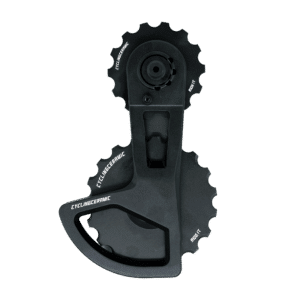
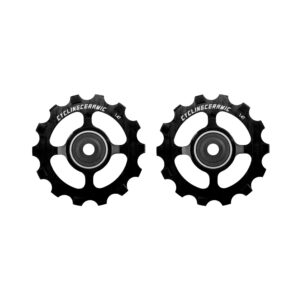
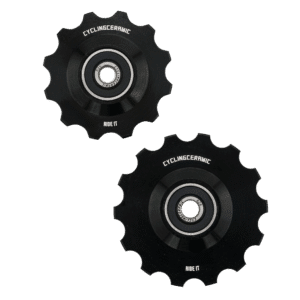
Poulies en céramique offrent la plus grande réduction mesurable de friction par rapport au coût. Les poulies CyclingCeramic testées à seulement 0,039 W contre 1,175 W pour les poulies Shimano Dura-Ace standard, un réduction de 97% documenté par Friction Facts.
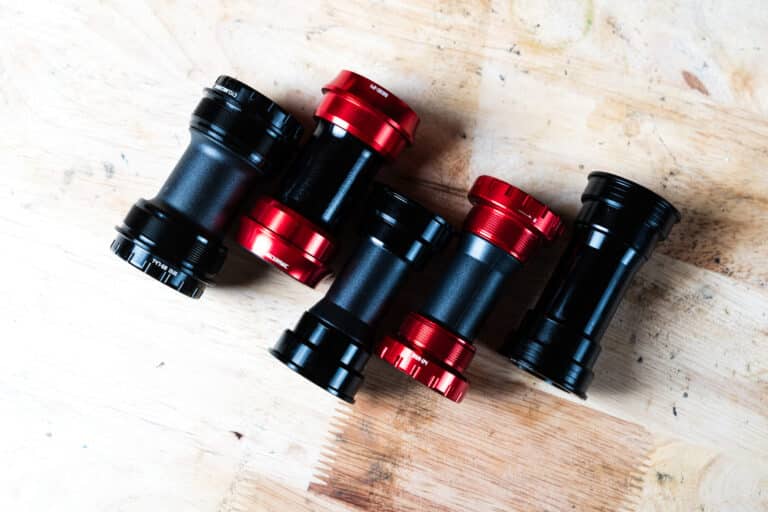
Un boîtier de pédalier en céramique est la deuxième étape naturelle, en réduisant les frictions par 64% (0,56 W contre 1,57 W) avec une installation simple dans votre cadre existant.
Optimisation de chaîne par lubrification à la cire ou une chaîne dédiée à faible friction peuvent permettre d'économiser environ 3W par rapport aux chaînes lubrifiées à l'huile, une amélioration particulièrement précieuse sur gravier où la contamination de la chaîne accélère l'accumulation de friction.
Niveau 3 : Roulements de roues
Kits de roulements de roue en céramique livrer un 53% réduction de friction tout en offrant une durabilité supérieure dans des conditions de gravier difficiles. Cette mise à niveau s'ajoute aux composants de niveau 2, contribuant à l'avantage système total d'environ 10 W documenté lors des tests en laboratoire.
Niveau 4 : Points de Contact et Poste de Pilotage
Les guidons en gravier évasés améliorent le contrôle et le confort. Une tige de selle télescopique ajoute de la polyvalence dans les descentes techniques. Les composants en carbone réduisent le poids et amortissent les vibrations. Ces améliorations augmentent significativement la qualité de conduite mais n'apportent pas de gains de puissance mesurables.
Chaque niveau s'appuie sur le précédent. Lorsque vous aurez traité les niveaux 1 à 3, vous aurez obtenu la grande majorité des gains de performance disponibles, et ce, dans l'ordre qui offre le meilleur retour sur investissement.
Questions fréquentes
Quels composants devrais-je améliorer en premier sur mon vélo de gravel ?
Commencez par les pneus et l'ajustement du vélo, car ils offrent le plus grand impact pour le coût le plus bas. Une fois votre base établie, la réduction de la friction de la transmission offre le meilleur rendement watts par euro. Les galets de dérailleur en céramique offrent une réduction de friction de 97% par rapport aux galets standard (Tests de Friction Facts), suivi d'un boîtier de pédalier céramique à% réduction de 64. Kits de roulement de roue compléter le système avec une réduction de friction de 53%. Cette approche graduée permet d'économiser environ 10W au total sur le système.
Puis-je utiliser des composants de vélo de route sur un vélo de gravier ?
De nombreux composants de vélo de route fonctionnent sur les vélos de gravel, mais avec des nuances. Les groupes de vélo de route peuvent fonctionner sur les cadres de gravel, bien qu'ils manquent de plages de vitesses plus larges et de dérailleurs à embrayage conçus pour les terrains accidentés. Les composants de réduction de friction de la transmission, tels que les roulements en céramique, les boîtiers de pédalier et les galets de dérailleur, fonctionnent de manière identique sur les vélos de route et de gravel, offrant les mêmes économies de watts quel que soit le terrain. Cependant, des groupes spécifiques au gravel comme Shimano GRX, SRAM XPLR et Campagnolo EKAR offrent des avantages, notamment des plages de vitesses plus larges et une meilleure rétention de chaîne qui sont importantes sur les surfaces rugueuses.
Les roulements en céramique résistent-ils sur terrain de gravier ?
Les roulements en céramique de qualité supérieure sont en réalité mieux adaptés aux conditions de gravier que les roulements en acier standard. Le nitrure de silicium (Si3N4) les billes en céramique sont totalement insensibles à la corrosion : elles ne rouillent pas, quel que soit le contact avec l'eau, la boue ou le sel. Les roulements en acier chromé standard ne contiennent que 1,5% de chrome et se corrodent facilement dans des conditions humides. Les roulements en céramique de grade 3 de CyclingCeramic sont associés à des pistes durcies Rc 62+ et soutenus par une une garantie de 4 ans, confirmant leur durabilité dans des conditions exigeantes, y compris le gravier, le cyclocross et le bikepacking.
Quelle est la différence entre les roues 700c et 650b pour le gravel ?
Les roues 700c roulent plus vite sur des surfaces plus lisses et sont préférées pour le gravel. La plupart des cyclistes les associent à des pneus de 38 à 45 mm pour un meilleur équilibre entre vitesse et confort. Les roues 650b acceptent des pneus plus larges (jusqu'à 54 mm et plus), offrant plus d'amorti, de traction et de stabilité sur terrain accidenté au détriment d'une efficacité de roulement réduite. Quelle que soit la taille de la roue, la mise à niveau des roulements de moyeu vers des roulements en céramique offre un 53% réduction de friction qui profite aux deux configurations de manière égale.
Combien de watts puis-je réellement économiser en améliorant les composants de mon gravier ?
Indépendant Laboratoire d'essais Friction Facts environ 10 watts d'économies totales sur le système lors du passage des composants de transmission standard aux équivalents CyclingCeramic : les galets de dérailleur permettent d'économiser environ 1,1 W (réduction de 97%), les boîtiers de pédalier permettent d'économiser environ 1 W (réduction de 64%), et les roulements de roue permettent d'économiser environ 2,9 W (réduction de 53%). Combinée à l'optimisation de la chaîne, le système complet atteint environ 10 W, ce qui équivaut à retirer plus de 3 kg de votre vélo. Ces économies sont particulièrement significatives aux vitesses typiques en gravel (25-35 km/h), où la friction de la transmission représente une plus grande part de la résistance totale.
Conclusion
Le cyclisme sur gravier récompense l'efficacité autant que l'endurance. Chaque watt que vous perdez en friction de transmission est un watt que vous avez payé par l'effort mais jamais reçu en vitesse. La bonne nouvelle : ces watts sont récupérables.
Une approche stratégique des améliorations des composants de gravier, en commençant par l'optimisation des pneus et de l'ajustement, puis en abordant la friction de la transmission par des roulements en céramique et des lubrifiants à faible friction, peut permettre d'économiser jusqu'à 10W tout en améliorant simultanément la durabilité dans les conditions difficiles qui définissent le gravel. C'est l'équivalent de retirer plus de 3 kg de votre vélo, grâce à des composants plus intelligents plutôt qu'à un cadre plus léger.
Que vous participiez à la Unbound Gravel ou que vous exploriez des chemins de campagne le week-end, la physique est la même. Une friction réduite permet à une plus grande partie de vos efforts d'atteindre le sol. Et lorsque le terrain devient accidenté, les composants conçus pour résister à la poussière, à l'eau et aux impacts sans dégradation ne sont pas seulement plus rapides ; ils sont plus fiables.
Explorez le complet de CyclingCeramic plage de gravier et commencez par la mise à niveau qui offre le meilleur retour : kits de roulements de roue en céramique qui réduisent la friction de 53% et repoussent les pires conditions que le gravier peut leur infliger.
Produits mentionnés dans cet article

Écrit par
Ilan
Consultant SEO — La Refonte
Consultant SEO et stratège de contenu responsable de la stratégie de croissance organique de CyclingCeramic. Chaque article est fondé sur les données des tests Friction Facts et sur une expertise réelle du cyclisme.