What Size Pulley Wheels Do You Need? Compatibility by Groupset

Pulley wheel size is dictated by your rear derailleur, not by your cassette or your number of speeds alone. Each manufacturer designs the cage around a specific tooth count, and that tooth count is what you must match. The table below lists the confirmed CyclingCeramic replacement sizes for the current road and gravel groupsets, written as upper / lower.
| Groupset | Pulley Size (upper / lower) |
|---|---|
| Shimano Dura-Ace R9100 (11-speed) | 11T / 11T |
| Shimano Dura-Ace R9200 (12-speed) | 11T / 11T |
| Shimano Ultegra R8000 / R8100 (11 & 12-speed) | 11T / 11T |
| Shimano GRX & XTR (11 / 12-speed gravel & MTB) | 14T / 14T |
| SRAM Red / Force AXS (12-speed, 1st generation) | 12T / 12T |
| SRAM RED E1 (latest 12-speed) | 12T / 14T |
| SRAM Red XPLR AXS (13-speed gravel) / EAGLE T-TYPE | 14T / 16T |
| SRAM XPLR (12-speed) / Eagle MTB | 14T / 14T |
| Campagnolo Record / Chorus (11-speed) | 11T / 11T |
| Campagnolo Super Record & 12-speed | 12T / 12T |
| Campagnolo Super Record Wireless (13-speed) | 14T set |
| Campagnolo EKAR (13-speed gravel) | 12T / 14T |
Three patterns stand out. Shimano road derailleurs consistently use matched 11T / 11T pulleys across both 11-speed and 12-speed road generations, while Shimano gravel and MTB (GRX, XTR) move up to 14T. Early SRAM road AXS uses 12T / 12T, but the newest hardware, SRAM RED E1 and the 13-speed XPLR, adopts split sizes. Campagnolo spans the widest range, from 11T on classic Record up to the 13-speed EKAR at 12T / 14T, which is exactly why the upper / lower notation matters. To identify your groupset, look for the model code printed on the rear derailleur cage, such as R9100, R8000, the SRAM model name, or the E1 / XPLR designation. The full ceramic pulley wheel range is organized by these groupset codes so you can select the exact matching set.
Upper vs Lower Pulley: What the Tooth Count Notation Means
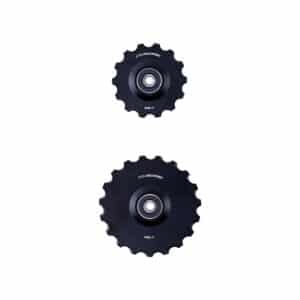
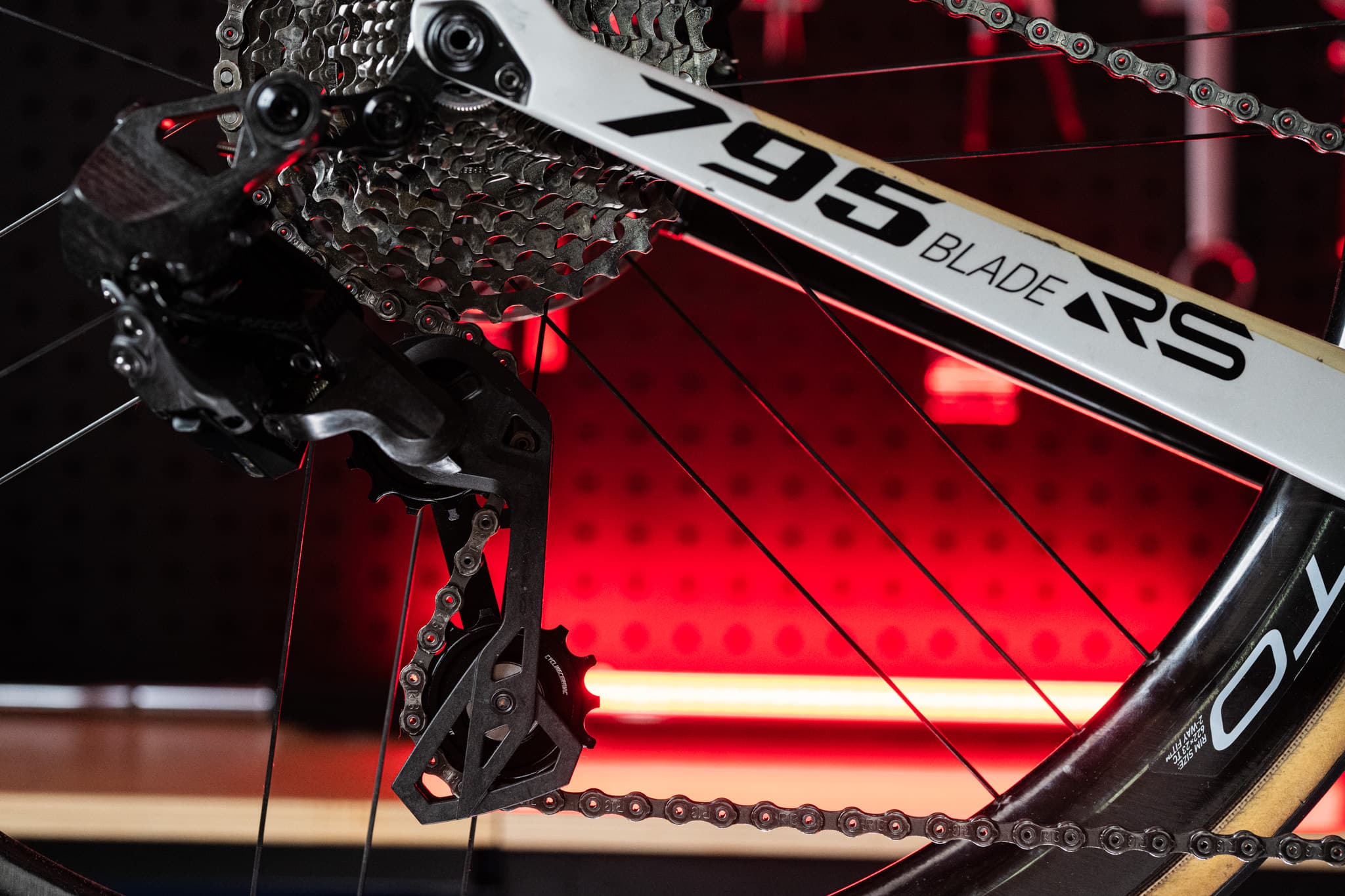
A rear derailleur carries two pulley wheels, and they do different jobs. Reading the size as a pair, upper then lower, tells you exactly what to order. The upper pulley is the guide pulley. It sits closest to the cassette and is sometimes marked with a G. Its job is to steer the chain laterally onto the correct sprocket during a shift. To do that cleanly it is built with a small amount of side-to-side float, which is why guide and tension pulleys are not always identical even within the same derailleur. The lower pulley is the tension or idler pulley. It sits at the bottom of the cage and keeps the chain under constant tension as the derailleur takes up slack across the gear range. It runs in a straighter line and prioritizes low friction over lateral guidance. When a size is written as 11T / 11T, both pulleys carry eleven teeth. When it is written as 12T / 14T, as on Campagnolo EKAR and SRAM RED E1, the upper guide pulley has twelve teeth and the lower tension pulley has fourteen. The 13-speed SRAM Red XPLR goes further still, pairing a 14T upper with a 16T lower. Getting the order right matters: fitting the larger pulley in the upper guide position, or vice versa, throws off chain wrap and shifting.
Why Pulley Size Matters: Chain Wrap, Tension, and Shifting
Tooth count is not cosmetic. The pulley size your derailleur was engineered around governs three things that directly affect how your drivetrain runs. Chain wrap. The number of teeth and the position of the guide pulley set how much of the chain engages the cassette and how the chain articulates through the cage. A pulley with the wrong tooth count changes the wrap angle and can leave the chain poorly seated. Chain tension. The lower tension pulley keeps the chain taut across every gear. If the pulley diameter is wrong for the cage, tension is either too slack, risking a dropped chain, or too tight, adding drag. Shifting quality. The upper guide pulley positions the chain for each shift. The correct tooth count keeps tooth engagement consistent so gear changes stay fast and precise. The general mechanical consequences of fitting the wrong size are well documented: hesitant or noisy shifting, accelerated chain and pulley wear, and in extreme cases a chain that drops off the cage. None of these are CyclingCeramic-specific failures; they are the standard outcome of a mismatched pulley on any derailleur. This is also why the right tooth count is the prerequisite for efficiency to translate into clean running. Independent Friction Facts testing recorded CyclingCeramic 11T pulleys at 0.039W of friction versus 1.175W for a stock Shimano Dura-Ace pair, a 97% reduction; the full breakdown lives in our ceramic versus aluminum pulley wheels comparison.
Standard Replacement vs Oversized Cage Pulleys
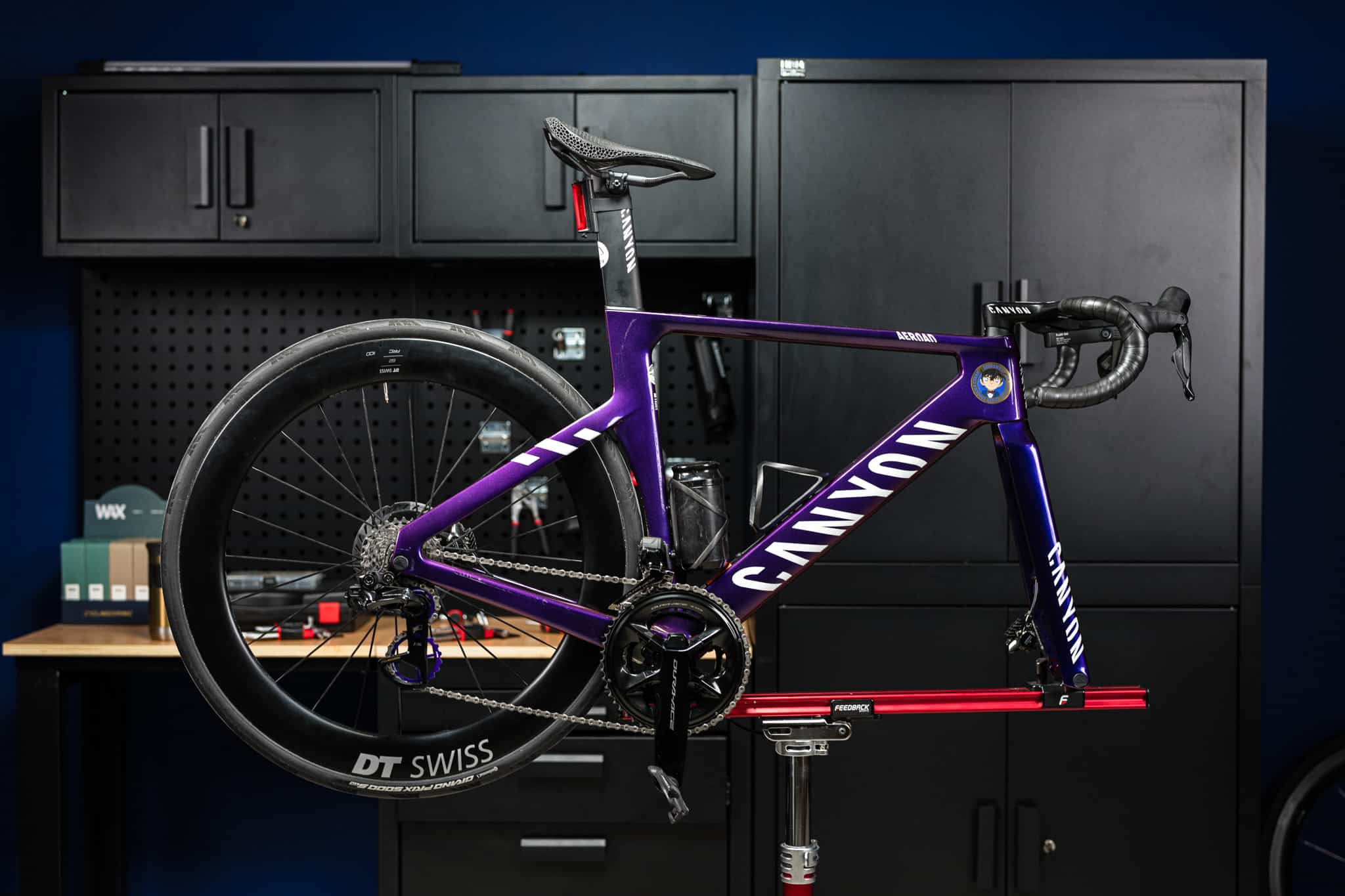
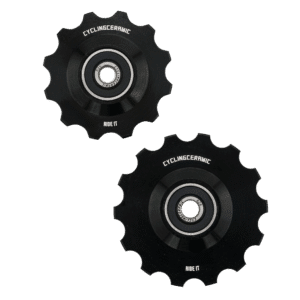
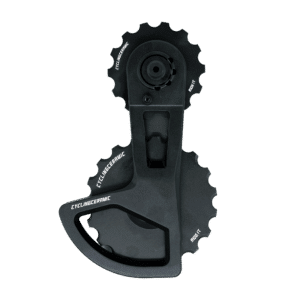
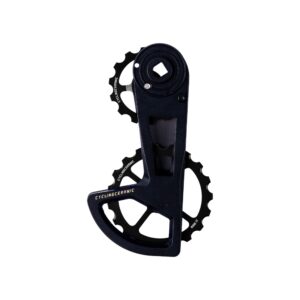
One of the most common points of confusion is mixing up two different products. They are not the same purchase, and choosing between them changes which sizes apply. Standard replacement pulleys are direct swaps for the pulleys your derailleur shipped with. They keep the original tooth count, for example 11T / 11T on Shimano road or 12T / 14T on SRAM RED E1, and fit into the stock cage. This is what you want if your goal is to upgrade bearing quality, restore worn pulleys, or improve shifting feel without changing the derailleur geometry. Every size in the compatibility table above refers to these standard replacements. Oversized cage systems (OSPW) are a separate product that replaces the entire derailleur cage along with larger pulleys. CyclingCeramic oversized cages typically run a 14/19T layout, with dedicated versions engineered for road, gravel (including Shimano GRX / GRX Di2) and SRAM AXS. The larger pulleys reduce the chain articulation angle and cut additional friction, but because they change the cage geometry they are a different fitment, not a drop-in replacement for stock pulleys.
| Aspect | Standard Replacement Pulleys | Oversized Cage System (OSPW) |
|---|---|---|
| What it replaces | Pulley wheels only | Full derailleur cage + pulleys |
| Tooth count | Stock size (e.g. 11T / 11T, 12T / 14T) | Oversized, typically 14/19T |
| Fitment | Direct swap | New cage, geometry changes |
| Derailleur adjustment | B-tension check advisable | Full B-tension + limit setup |
| Best for | Bearing upgrade, like-for-like | Maximum friction reduction |
If you simply want better, longer-lasting pulleys for your existing setup, the standard replacement in your groupset size is the right choice. The oversized cage is a separate, more involved upgrade for riders chasing the last fraction of a watt.
How CyclingCeramic Pulley Wheels Fit In
Every CyclingCeramic pulley wheel is built to the correct stock tooth count for its target groupset, so the sizes in the table above are exact replacements, not approximations. The range covers the full spread of modern drivetrains: 11T for Shimano road and classic Campagnolo, 12T for 12-speed SRAM AXS and Campagnolo, 12/14T for Campagnolo EKAR and SRAM RED E1, 14T for Shimano GRX/XTR and SRAM XPLR/MTB, a dedicated 14/16T set for SRAM XPLR 13-speed, and a 14T set for Campagnolo Super Record 13-speed. The bodies are machined and run on Grade 3 silicon nitride (Si3N4) bearings, the finest ceramic grade available, and the whole range is handmade in France and backed by a 4-year warranty, well above the typical one-year cover on stock components. For a like-for-like replacement, fitting is usually a direct swap: remove the original pulley bolts, transfer the new pulleys in the correct upper and lower positions, and reassemble. Because pulley orientation and B-tension affect shifting, a quick check of the B-tension screw afterwards is sensible, and it is essential if you move to an oversized cage. Step-by-step fitment notes and groupset-specific guidance are on the derailleur pulley support page. A note on the very latest hardware. For the newest 12- and 13-speed electronic groupsets, including SRAM RED E1, SRAM Red XPLR AXS 13-speed, Campagnolo Super Record Wireless and the current wireless Shimano Di2, pulley fitment differs from earlier models. Rather than assume a size, check the compatibility selector on the pulley wheel product page or contact the team through the pulley support page for a confirmed match.
Frequently Asked Questions
What size pulley wheels do I need for Shimano?
What size pulley wheels do I need for SRAM?
Are Shimano and SRAM pulley wheels interchangeable?
What is the difference between the upper and lower pulley wheel?
What size pulley wheels do I need for SRAM Red XPLR 13-speed?
Do I need to adjust my derailleur after fitting new pulley wheels?
Conclusion
Choosing the right pulley wheel size comes down to one rule and one table. The rule: match the brand and the exact generation of your rear derailleur, never mix Shimano, SRAM, and Campagnolo. The table: most Shimano road groupsets take 11T / 11T, first-generation SRAM Red and Force AXS take 12T / 12T, SRAM RED E1 takes 12T / 14T, SRAM Red XPLR 13-speed takes 14T / 16T, Campagnolo Record takes 11T / 11T, and Campagnolo EKAR takes 12T / 14T. Read the size as upper / lower, confirm whether you want a standard like-for-like replacement or a separate oversized cage system (typically 14/19T), and a like-for-like fit is usually a direct swap with a quick B-tension check. When the size matches, a quality pulley delivers everything its bearings promise; when it does not, even the best bearing will shift poorly. Find your exact groupset in the CyclingCeramic pulley wheel range, and if you are running the newest electronic groupset, SRAM RED E1, XPLR 13-speed or Campagnolo 13-speed, the derailleur pulley support page will point you to the right set. To understand what the upgrade actually does to drivetrain efficiency once it is fitted, the ceramic versus aluminum comparison covers the lab data in full.
Products mentioned in this article